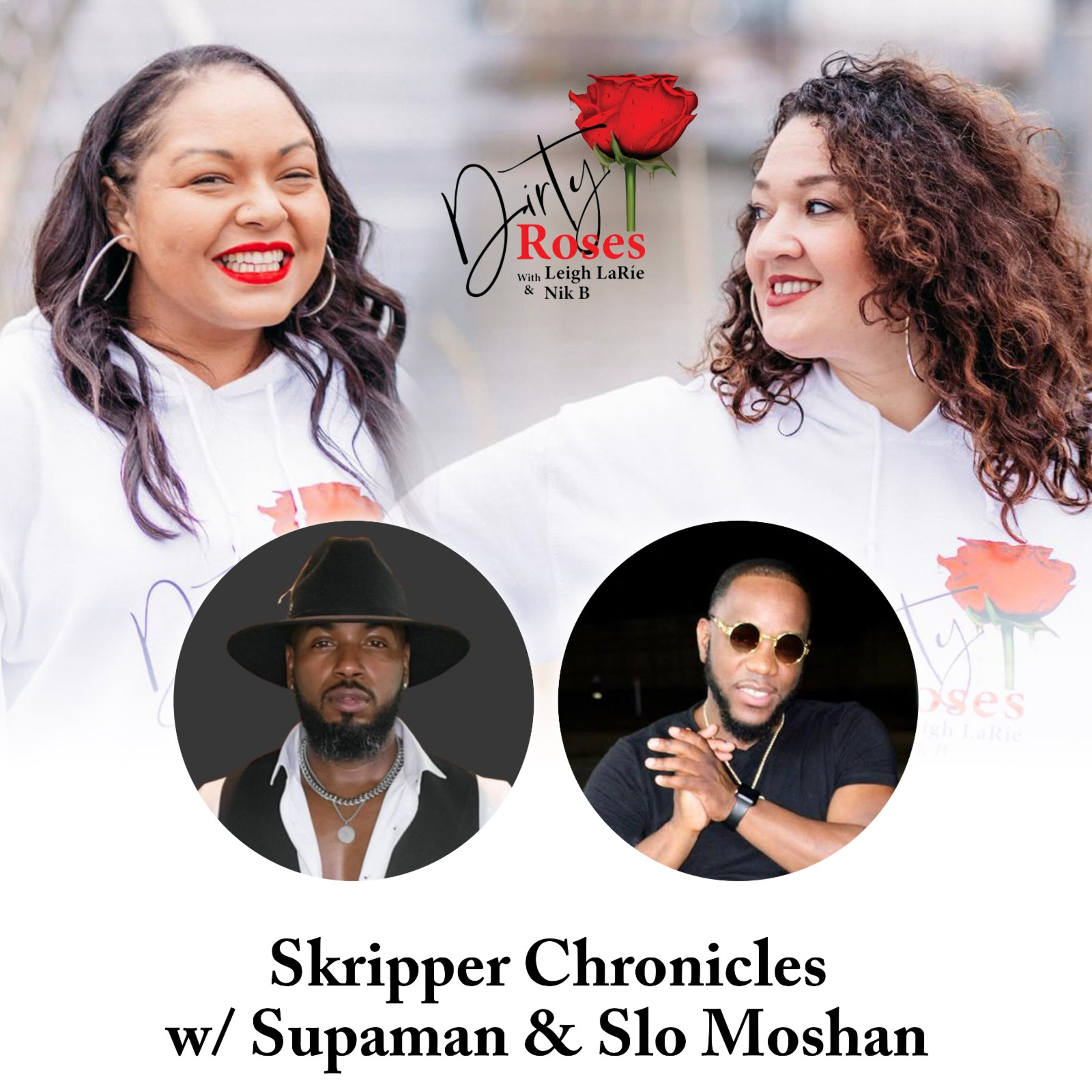
[00:00:00] Speaker A: I'm Lila Rie. And I'm Nick B. Listen, we're just two single girls from the city of roses discussing all things love, lust and perception. And roses are a symbol of all.
[00:00:09] Speaker B: Things beautiful about love.
[00:00:11] Speaker A: But as you know, love can get a little dirty. So we're here to talk about it. Dirty Roses podcast starts now. Hey, I'm Lila Ree and welcome to Dirty Roses Podcast. Now, you probably have noticed I'm sitting solo as far as host wise because my dear friend and your favorite co host, Nick B. Is out. She is doing her whole health journey right now. She is getting better. She is getting to her best self and probably by the time this airs, you're gonna probably be seeing her outside. So right now y' all can go ahead and follow her on social media. She's sharing her entire weight loss journey and her getting to her better health journey on social media. So make sure you check her out right there. Send us some love, some well wishes, some good vibes, because when she gets outside, I'm gonna be back outside. So we're gonna do all that. But in the meantime, I, I'm so excited because I'm being joined by like this, I don't know what you want to call it, like this power couple duo, this sophisticated, this luxury branding of a mix of marketing and branding and culinary and all the things that we all love because we love food, we love a good content, we love a good event, we love a good everything. So in this season that we got right now, we are being joined by none other than Ms. Crystal Chanel and Chef Kiara of Kitchen Killa.
[00:01:23] Speaker B: Yes.
[00:01:25] Speaker A: Now, Crystal is the CEO, CEO, founder of press release marketing, doing like high end events, regular events, low key, intimate setting events, consulting, like get your brand out there. All the things. Like she has like the brain of a genius when it comes to branding and marketing and strategizing. So we are so excited to have her here. And then you've got like the one that's gonna make you fat. I mean like off top, big back season is in. If you like food, you won't. And if you've gone to any galas or any events in Portland, I, I guarantee you've had her food about 55,000 times because she is like the go to person right now for everything. And I can see this happening for a very long time because we have the chef, CEO, founder of Kitchen Killer Culinary Solutions here. I'm talking. Listen, I had to pause for that one because I was like, I should have sent a message and been like Bring me some food so we could do some live tasting right now, because that's how good it is.
It's like luxury, sophisticated comfort foods because they're from Florida, and they. They done brought the little Swagalicious with them. So we're so excited to have y' all here to talk about Yalls journey, the business minds, the. The new marriage. I mean, everything is going big for y' all right now, and I love it, and I can't wait to talk about it. And we're calling this episode Seasoned and Strategized. Right. So to you guys, each. What is those words? Like, which word really means something to you, ruminates with you about your personal skill set, and which one did you have to really develop?
[00:02:59] Speaker C: I would say, first of all, Lee, thank you so much for having us. This is a special moment. I think this might be our first time doing a podcast together.
[00:03:10] Speaker B: Lots of people have talked about it, but you've been the first to get us here. Look pretty rosy.
[00:03:16] Speaker A: We get shit done. Okay.
[00:03:20] Speaker C: So seasoned or strategized? I think that's such a great question because. Because I'm gonna say I'm definitely a strategy person. I strategize.
And, you know, we took a. Both of us took a very interesting route to entrepreneurship, where it was about not just making money, but just following our passion, following what we like to do, and figuring out how to then turn that into profits. And so there's a strategy in that, you know, being able to wake up and do what you want to do every single day, it takes more than just.
It takes what it takes. And I think we both did it in our own unique ways. And so for me, I think it's all about the strategy. I love it.
[00:04:05] Speaker B: I think we're a good balance because I am probably the least strategic person because I very much so go on feeling, and very much so go on. You know what I mean? What the experience and how I feel and what I think it should be and all those things.
But you need both, right? And I think that's what makes us a good balance, because oftentimes I'm off floating in la la land, and she'll be like, hey, does that make sense?
So, you know, I think we balance each other well in that regard because, you know, oftentimes it doesn't make sense, but because it doesn't make sense, that's what makes it so fun.
[00:04:46] Speaker A: That's what makes it make sense. Right?
[00:04:48] Speaker B: That's what makes it make sense.
[00:04:50] Speaker A: I love it. What aspects of your business individ and then even together, like, because you guys do a lot of work together, right? Like you said, it's a good, you know, partnership that you guys have that really works. But what have you really had to develop and work on individually and then as you guys do business together?
[00:05:11] Speaker B: Well, I say in doing business together, Crystal and I started doing business together. I mean, we're married now, but we started with this client, you know, client and marketing professional relationship. And so it has always been about, you know, respecting each other in the space and respecting each other in our. In our own crafts and our expertises, you know. And I think as you then start to get into this romantic relationship and understanding, you know, how to go home and be a married couple versus being at work, you know, there's always some intention there in trying to be sure that we are continuing to respect each other in those spaces as professionals, but then also as friends and as a married couple.
So I think that's something that we're constantly working on. I know for me, you know, constantly working on it and respecting. Hey, she's at work. You know what I'm saying? I want to chat, I want to talk. I want to do all the things I want to. What you want to do, where you want to go. But I have to respect. She's at work and she's clocked in. And so I absolutely respect that. And so just making sure that we can sometimes.
[00:06:21] Speaker A: Oh, oh, oh.
[00:06:23] Speaker B: I always respect it. It's just a matter if it gets implemented or not.
[00:06:27] Speaker A: Right, right, right, right. Now listen, I mean. Cause you're all. Cause you're entrepreneur, so you're almost always at work while you're even not at work. Right, sure.
[00:06:35] Speaker C: In a weird way. So, like, I think Kiara is definitely always at work ideology. Like, when she walked in and she saw the kitchen in your studio, she's like, this is a kitchen.
And then now she's looking at appliances and doing.
And she would do that on a Saturday, you know, Whereas me on the weekends, I am definitely off.
[00:06:57] Speaker A: I love that.
[00:06:58] Speaker C: Unless it's an event. Yeah, I'm off. So.
But we. Our work is very adjacent, and I don't think we planned for that, but it really is. And Portland made it, so for sure.
[00:07:08] Speaker A: So you touched on two things because you said, like, on weekends you're off. Right. So I know for entrepreneurs, we have had a lot of entrepreneurs on the show over the season, like a ton of them. And we talk about, like, balancing when you do get to have your personal life versus work. Right. Like, it's so hard to turn it off. Especially when you are like in the beginning stages, you're working towards a goal and then when you get established, you're working towards elevating the goal so you're never like, off. And how do you balance that? How do you set boundaries? Like, what does that look like?
[00:07:35] Speaker C: I think it comes with time. Like, this is my 12th year in business, so obviously in the beginning I worked all the time and I had a day job, I was a secretary. So I worked before I got to my nine to five. After I got to my nine to five, you know, left my nine to five and then on the weekends.
And then I think it was probably in year seven or eight where I realized I'm the CEO, right?
[00:08:01] Speaker B: I can be in control.
[00:08:03] Speaker C: And I think it was also the moment where I made the shift and with Kiara's help for sure, of.
[00:08:12] Speaker B: You.
[00:08:12] Speaker C: Know, just prioritizing my own mental health, prioritizing my family, prioritizing and not operating from a back against the wall struggle standpoint, but coming into like, abundance and prosperity. And it took me eight years in business, made a few dollars before I was like, oh, I can pay rent.
[00:08:37] Speaker A: Yes, yes.
[00:08:39] Speaker C: I don't have to act like.
[00:08:43] Speaker B: So I added like, you hungry man?
[00:08:45] Speaker A: That is scarcity mindset. It's a real thing.
[00:08:47] Speaker C: It's a real thing as hard to let go. And so now, probably for the last, like five years or so, I've been able to say, oh, I don't work on the weekends and. But I've worked hard to get to the point where I feel comfortable mentally to say that.
[00:09:01] Speaker A: Gotcha. I love that. I love that. Are you, how do you set boundaries or do you.
[00:09:06] Speaker B: No, I do. I think I, you know, for me, for me, I, I really, I really dig deep into my team and I have a really great team that allows me, especially now I say in the last. And, and when I, I mean, like recently, right. In the last year, you know, I've been able to develop a team that really, everyone embraces their roles.
[00:09:32] Speaker A: Nice.
[00:09:33] Speaker B: And so then they are really, you know, they're, they're, they're on me about, hey, stay over there. I don't need you to do that.
You do that because that's what we need from you. Right? You do that. That's what we need from you. And we'll do this part and, and it's really great. So that allows me to just stick to the things that are needed of me, you know, and growing and developing the business and enhancing the business. And, you know, doing those detailed things and doing what owners do and allowing the folks that I've trusted to put in place to cook and develop and. And train other chefs to do those things.
It was scary originally. Yeah, it was scary originally. But, man, you know, there's some really talented chefs in this world, and particularly in Portland. And I think that when you do good work and you put out good product, people who are just as good or if not better, want to be around you, and they want to be a part of what you're doing.
And real, true, good people and good culinarians recognize the strengths in other people, and they're like, yo, this I'm a prep master. I'm a knife king. Let me come over here and cut these onions for you.
[00:10:38] Speaker C: Right, right, right.
[00:10:39] Speaker B: You know what I mean? You know? And then somebody else is gonna be, yo, I make sauces like no other. Okay, cool, right? I do desserts like nobody's business.
[00:10:46] Speaker A: I just cook crack. So I can do this real good.
[00:10:48] Speaker B: You know what I mean?
Whatever your specialty is, you know? And I think we all appreciate each other in our realms, right. Of expertise, and we let each other do that. And in turn, it allows me to have boundaries and take days off and appreciate their days off and be like, yo, you did that.
[00:11:06] Speaker A: Yes.
[00:11:07] Speaker B: Go take a break. You know what I mean? That kind of stuff. So I think we're in a good space when it comes to having boundaries.
[00:11:13] Speaker A: I love that I meet so many entrepreneurs who are just a team of one because it's like, a, it's hard to relinquish that control to other people. And B, you're like, you get into a good swing of things with how you manage your money as far as an entrepreneur. So having to have a team and pay them and trust them and all the things, it's like, it's very difficult. So I love the fact that you have a team that you can really trust. And when it comes to food, yeah, that's tough because, you know, they be like, this didn't taste like kitchen kale last time. You know, you'd be like, oh, that was my chef. You know? But you have, like, a really good flow of people who really know what you do and how you do it. So I can attest to the fact that you got a good, good ass team. I love it. I'm here for it.
[00:11:52] Speaker B: And there's only so much you could do by yourself, right?
[00:11:54] Speaker A: No, that's.
[00:11:55] Speaker B: It's only so much. We got 500 people tomorrow. There's no way I can serve 500 people by myself, right?
[00:12:00] Speaker A: Yeah.
[00:12:00] Speaker B: So I gotta have people who can, who can do their role and do it well. And collectively we put out a good product.
[00:12:05] Speaker A: Yeah. I gave up catering along real quick. We did it for about a year. So we had got three, like really big for us. It was like 180 people. And it was just me and my ex. And I did most of the cooking and then I did all the setup by myself. Like, it was like a team of one. He was like, I'm just gonna put the food in the smoker and that's what I do. That's my role. And I was like, got it. No, it wasn't. Oh, my God. And I was like, okay, three back to back events of 180 people each. I was like, I don't like cooking no more.
[00:12:32] Speaker B: Right.
[00:12:32] Speaker A: And it used to be my passion. I mean, it's my love language. I love cooking for people. So I'm like, let me not make a business out of it because then I lose my love for it. So I'm gonna just cook this big pot of gumbo, I'm gonna put a post out there and if y' all want some, come on and get it. But other than that, no pressure. You gonna hire a kitchen killer? Cause we're not doing it.
But you guys both do very high end events. Usually, like now what we see in the public eye, right? Like very high end, very luxury, very sophisticated, as you guys say, events.
When people look at you and I know that we see like you're booming, like you're everywhere, right? And my guest, co host of the season, Charlisa, told me this time that she struggles with this, that people think that because they are just now seeing you, that you're brand new and that you're brand new and somehow you magically come up on success, right? And she always tell them, I'm new to you, but not new to this.
So how do you guys navigate the ideas that people didn't know who you were, so they assume that you don't know much or that you're just brand new or that you came onto the some luck and you just knew the right people. Like, how do you guys navigate that?
[00:13:33] Speaker B: Well, I think, I think marketing solves a lot of that.
Yeah, yeah, I think marketing solves a lot of that. You know, oftentimes because your business is your baby.
[00:13:43] Speaker C: Right.
[00:13:43] Speaker B: You know, you're offended when somebody's like, you know what I mean? Well, you know, can you do this for $7? Be like, ma' am. I can't do that.
[00:13:50] Speaker A: And I can't buy an egg for $7.
[00:13:54] Speaker B: And then. And then even outside of that, just, you know, not knowing who you are, you know, you put so much the. The business and into growing the brand and developing and being as good as you are, you totally sometimes get offended, you know, or are shocked or, you know, want to check somebody.
[00:14:12] Speaker A: Hey, what you mean you don't know me?
[00:14:13] Speaker B: Of course you know me, right? But sometimes, again, you have to let the marketing do the work, right? And thankfully for me, I have the best marketer, I have the best. The best brand developer.
[00:14:23] Speaker A: Listen.
[00:14:24] Speaker B: And so the work that her and her team have put in to one, make sure that I am established in this realm, right? You could Google me, you can Google Kitchen Killer. That will tell you that we.
[00:14:35] Speaker A: I love that.
[00:14:35] Speaker B: You know what I mean?
It'll tell you that I haven't just arrived, right? We've been here, you know, we. We have media, we have folks who've been talking about us and this brand and the quality of work that we do for 10 years now.
And so, you know, you know, it is what it is, right? You know, folks are gonna be skeptical or whatever the case may be. But again, if you look us up, if you check into our references, if you talk to our past clients, if you look at testimonials, you look at folks who we've dealt with, you know what I'm saying?
There's not a whole lot more I have to say. Right? There's not a whole lot more I have to say.
[00:15:12] Speaker C: I love that answer, by the way, and I want all my clients to have that answer. So if you're listening and you're a client of press release and marketing, that is the perfect answer.
[00:15:21] Speaker A: I love it.
[00:15:22] Speaker C: With me being a marketer, it's like, you know how they say the cobbler's kids never have shoes or something like that?
So I probably have a whole lot less marketing than my clients might not be able to Google me. Maybe you can. Who knows?
But I think that experience gives you confidence.
[00:15:43] Speaker A: Yes.
[00:15:44] Speaker C: And so when I walk into a space, oftentimes, especially in Portland, I might be the only woman in the space. I might be the only black person in the space, and I'm the CEO, and. But the experience says, excuse me, let me tell you how to do this right? And I don't even think twice about it.
[00:16:02] Speaker A: Yeah.
[00:16:02] Speaker C: So I come in bold, I come in confident.
I'm real spiritual. So I came with Jesus. And so, you know, so I just feel I Just take control of the situation.
And so it kind of could create a thing. Either you like me or you don't.
But I never really.
I never backed down from standing on, you know, standing 10 toes down that I came to get a job done. Yeah, we're gonna do these deliverables, and either you with me or you gonna watch, but we're gonna get it done today. And that's just the energy I carry.
[00:16:33] Speaker A: So. Yeah, yeah, yeah.
[00:16:35] Speaker C: It makes her interesting stories at night.
[00:16:38] Speaker A: I believe it. I believe it.
So with that said, you guys, like I said, you guys do the luxury event. So what does the word luxury mean to you? And how would you define that for a client or someone that's hiring you for a service?
[00:16:52] Speaker B: Well, for us, you know, what we do is service based.
And for me, what it means when I say we provide a luxury service is the intention and the anticipatory nature behind what we do. Right.
Because we've served folks of all statures. Right, Right. High net worth folks, or, you know, folks, professionals, executives, you know, millionaires, high level politicians, you know what they want in the realm of their level of service. You know how to anticipate, you know how they want their table set, you know how to anticipate, you know, what juice they're drinking with their. With their food, you know, and the timing in which it comes out, the way they want it set, the way they want to see it. The portion sizes. Right, Right. So those are the things to me, that one, knowing your client, taking the time to know the client, taking the time to provide them with quality.
Those are the things that make it luxury. To me, it's not so much about a dollar amount or what it looks like it's about. Do you know how to serve? Do you know how to serve without being.
What's that? You know, like a. A bull in a china shop.
[00:18:06] Speaker C: That's what I was thinking.
[00:18:07] Speaker B: But I like that, you know what I mean? Like sometimes, you know, oftentimes chefs or service people in general, right. Will just come into a space and all of a sudden it's about them. And I'm like, yo, you're there to serve, to know how to put your best foot forward as quietly as possible in some spaces and let your art, let your craft, let what you know how to do speak for you and ensure that your guest or your client or whoever the person you're serving is, has everything that they need without having to ask for it.
[00:18:34] Speaker C: Right?
[00:18:35] Speaker B: And that takes some. Some humility. Right. It takes some just paying attention because.
[00:18:39] Speaker A: There's a lot of non humble people around.
Yeah.
[00:18:43] Speaker B: But you know what I think about interested about the humility and the humble component. Right.
You have to be confident to be, to have humility.
[00:18:51] Speaker A: That's facts.
[00:18:52] Speaker B: You get what I'm saying? You have to know that you know what you're doing and that you know your client and you are a master of your craft to have humility in how you present it. Right, Right.
[00:19:02] Speaker A: That's facts.
[00:19:03] Speaker B: And so I think that's where everybody has this kind of, or some people have this rambunctious, ah, I'm gonna come in and I'm gonna da, da, da, da, da something. Well, if you really knew what you were doing, you could come in and slide that thing in and have somebody be blown away and let them do the flip flop for what you just did versus you leading with it.
[00:19:20] Speaker A: That's facts.
[00:19:20] Speaker B: You know, that's facts.
[00:19:22] Speaker C: I would piggyback on Kiara. We are service business. Even though we're marketing, we're here to serve the needs of the client and to make sure that their message or their service or their product is the focal point. So even when we do events, I don't know if I refer to the events that I produce or that my company produces as luxury girl, Bye.
[00:19:44] Speaker A: I've seen your work, but I think.
[00:19:46] Speaker C: It'S like brand forward, like, did we center this client? And if we did, then we did our job. And to Kiara's point, it's never about me or a press release or even our team.
We like to be all the way in the back, but just watching everything come together. And if the client is able to either make more money or spread their message or collect more donations, then we feel like this job is well done. And so I kind of look at it the same way.
[00:20:15] Speaker A: I love it. What has been the, the biggest lesson or like a lie that you've had to overcome? Not about yourselves, but it's about being an entrepreneur and about business like it's never done.
[00:20:27] Speaker B: Yeah, it's never done. And even, and even in the sense of like, yeah, you got weekends, you go on vacation, but oftentimes when we're on vacation or we are taking breaks or, you know, doing that whole recharge, recover thing, you're thinking about the next step, right? You're thinking about the next step. You're thinking about how it gets bigger, how to be bigger, how to do more, how to, how to staff more, how to do more for your team, how to, you know, enhance their experience, how to make sure they're thriving and getting better at what they do.
So, you know, it just. It never ends. Right. I had a financial goal this year, and I looked at it and I actually had. I. It put me in kind of a.
I wouldn't say a depressed state, but it put me in a. In a kind of space. This summer when I saw I was trending to hit it, and I was like, damn, I don't feel no different.
You know what I mean? I was like, well, maybe that goal, you know, it wasn't about the financial goal. It's about what are those other things that I should be doing.
Excuse me, to enhance, that will make me feel more fulfilled. Right?
[00:21:31] Speaker A: Right.
[00:21:31] Speaker B: So it's just this never ending.
Hit that goal, but then what's another one? Right. Hit this goal, but then what's another one? It's never ending. And I think when you start as an entrepreneur, you think, oh, when I make this money, I'm good. Right, Right, right.
[00:21:48] Speaker A: Hey.
[00:21:48] Speaker B: And then you hit it and you're like, I think I need more.
Or, or. Or, you know, just understanding that obviously as you think about goals, right? And the way the cost of living is and all those things, those, those numbers don't equate to what they were 10 years ago when you made that goal.
[00:22:05] Speaker C: Right.
[00:22:06] Speaker B: So. And then, yeah, the way you build your business out and all that stuff, these things are different. So you can have a goal and hit it and then realize, oh, well, to run the kind of business I want to run, though, that's nothing. Right. And so your goals are always evolving.
It's a short answer to that, but it's deep.
[00:22:25] Speaker C: It's good. I'm really enjoying this podcast. I can't thank you enough because even though I'm sitting here as a guest, I'm listening to Kiara talk and being reflective. So that makes sense that the job is never done. I think some of the lie is one, I built my business serving black and brown clients, and I made my money by supporting black and brown businesses.
And oftentimes there's a narrative of black and brown business owners are providing a inferior product.
[00:23:00] Speaker A: Speak on it.
[00:23:01] Speaker C: And so my life is such that it's not true. Right. I think we have to vet people regardless of nationality and race.
But you can build a business supporting your own community. And I think it's important to know that.
The second thing that I think is important is the value of building a team. You know, having an assistant, having a website. We build websites every single day in my company. I don't know how to build a website.
[00:23:30] Speaker A: Right.
[00:23:30] Speaker C: And I think there's a misconception that if you are going to have a marketing company, then you need to know SEO. You need to know how to build a website. You need to know how to do graphic design.
I mean, no, I need to know how to manage money and contracts. I can hire anybody I want. I love having people around me that's smarter than me. And that is something that is not shown right away. As an entrepreneur, I'm a storyteller.
And however we tell that story, whether it's through events or websites or graphics or campaigns or strategic planning, my team does what they're good at. And it is a beautiful thing. So I think that sometimes we think in order to be in business for ourselves, we need to know everything. I see people planning an event. They're doing decor, they're doing logistics, they're.
[00:24:17] Speaker B: Running the concerts, they're catering their food, they blowing the balloons up, they're doing grocery shopping.
[00:24:23] Speaker A: That might have been me and April.
[00:24:24] Speaker C: I'm like, we can never be friends. Cause you always go be right. Right. I need you to get off. So I think we need to normalize working together and hiring each other and working for other black and brown people that own company.
[00:24:41] Speaker A: Yeah, I love it. So speaking of working together, you mentioned that y' all started off as a client and, you know, consultant type.
[00:24:49] Speaker C: Yes.
[00:24:49] Speaker A: So you were her marketing professional and then you were like, slide on here's digits. Go ahead and call me on the personal line. We gonna talk about marketing later.
How did that pan out? Like, I mean, clearly we don't have panned out, but how did that start? Like, what happened?
[00:25:07] Speaker B: You want to.
[00:25:09] Speaker C: And me and Kiara might have different lens because I don't know exactly when Kiara thought that I might have been.
[00:25:15] Speaker A: This is about to be that Martin Gina episode where they had different stories on how they met.
[00:25:18] Speaker B: I think we do have different stories.
[00:25:20] Speaker C: Different stories.
[00:25:21] Speaker A: I love it.
[00:25:22] Speaker B: As long as it ends up the same way. I think we do have different stories for sure.
[00:25:26] Speaker A: I love it.
[00:25:27] Speaker B: But yeah, I mean, I was working as a. I was transitioning rather into just being 100% entrepreneur. I was doing these pop up dinners. This is back when we were still living in Florida. I had this like one bedroom apartment and I was. I would push all the sofa out the way and line up seats and do these pop up dinners in my apartment.
[00:25:48] Speaker A: Oh.
[00:25:48] Speaker B: So it would be like 19 seats in my apartment doing pop up dinners. And because it's a one bedroom apartment, the kitchen's right there. The Dinner table's right there. So I'm cooking, I'm talking, I'm cooking, I'm talking. And so ultimately, though, we got to the point where, one, it was strangers who were starting to come, and I was like, I think I got to get this out my apartment.
But then, too, it. You know, once we move it to a different space, I won't have the luxury of being able to talk to people while I'm cooking. And at the time, Chris was on every. You know, just all over my social media. We had a ton of, like, mutual friends and all that stuff. And she was producing events and just doing all the things, and I slid in her DMs, like, Yo, I need a. I need a. I need an emcee, right? This is what I said. I need an emcee for my event, for my dinner party. And so I went to one of her events to kind of, you know, to vet her to come, you know, to see how she do what she do, and truly did. I went, you know, just to see the vibe and to see if I thought we could work well together.
And she did an amazing job. It was a really dope event.
I ran up on her, and, you know, she likes to say she saw me and was like, who are you? I don't know you.
[00:26:56] Speaker C: I do marketing. And that was the data. Who are you?
How did you find out about this event?
[00:27:03] Speaker B: So, yeah, long story. The long story short, she did emcee some events for me. She helped me produce some events.
And then as I talked to her about my dreams and what I wanted to do and how I wanted to build my brand, she's like, outside of an emcee, you need some help with that.
You need some structure, and you need to get rid of this little ugly logo you got. You need to.
[00:27:27] Speaker A: She done toe your work down.
[00:27:31] Speaker B: That's cute and everything, but.
Yeah, yeah, yeah, basically. And so she. She built me brand new, quite honestly, and I told her some of my dreams. I was like, I want to do this, I want to do that. And she's like, well, here's how you do that. And we were able to leverage her social capital because I was in a corner somewhere not being on social and. And really allow the brand to kind of become known in South Florida. And that helped me, you know, build out my clientele through a lot of word of mouth. And we did that for about two years, maybe year and a half. And as I just. A lot of times in my preparation for getting ready to be a private chef, I Would cook a lot for her. And I was just cooking. Cause I knew she'd give me honest.
[00:28:12] Speaker A: Feedback to woman's heart.
[00:28:14] Speaker B: I knew she'd give me honest feedback. But also, you know, again, she had a social network. So I'm like, post my little food on the ground, you know what I'm saying? Telling people about my food. You feel me?
But. But in that space, much like being in a space with any client, right? It's a very intimate space, you know? And so I'd be at her house cooking, and she was working.
[00:28:34] Speaker A: Gotcha.
[00:28:34] Speaker B: You know, she was working. I'd see her. You know what Dre said? You know, just hair pulled back, no makeup on.
That's how I would see her. And you know that watching her in that way made me fall in love. And so I was like, yo, what we doing?
[00:28:51] Speaker A: What was you looking over the counter like, yeah, girl, I'm about to whip these eggs. That's what you do. Y. I see you over there. I see you doing a spreadsheet, girl.
[00:29:00] Speaker C: I would look up and Kiara's eyes would be dead on me. I'm like, what is she doing?
[00:29:05] Speaker A: Did she get a little butterfly? She was like, oh, hold on. Let me. Let me sit real cute. Hold on. Let me just. I'mma type like this. Hold on.
Then you start wearing the cute sweatpants, right? Like, the intentional messy buns start popping out, right?
[00:29:19] Speaker C: I will tell you in my office when this was going down, what Keyara didn't know is I was really, really hustling. Every client was what you call a la carte.
We were project based.
And I was telling my assistant, I was like, we gotta do something different to bring in money. We're gonna start doing retainer clients.
And she was like, okay, cool. You got somebody in mind? I'm like, that Kiara girl that we've been working with.
Let's run it on her. So we created some packages, and I was like, okay, Keyarra, let's get together. And Keyarra was like, yeah, meet me at this oyster spot.
[00:29:53] Speaker A: Oh. Oh, the oyster.
[00:29:54] Speaker B: She hit you with the oysters.
[00:29:56] Speaker A: Okay, I see what you did there. I see what you did there.
[00:29:59] Speaker B: Okay, we closed the deal. You feel me?
[00:30:03] Speaker A: Hey, girl, take this aphrodisiac. Girl, I see what you did there.
[00:30:08] Speaker C: My assistant was like.
I was like, what should we do? She was like, go, go. We had never worked like this where we're going to dinner to meet a client. She's like, go close the highest package and tell me about it in the morning.
I Got there. Kiara signed the highest package, and then we locked eyes, and then it was just.
[00:30:29] Speaker A: Did some oyster shooters and it was just all over.
[00:30:32] Speaker B: That's all she wrote. We ended up at karaoke.
We did all the things. It was like a three hour dinner with the nightcap and the whole vibe, and it was a good time.
[00:30:42] Speaker C: Yeah.
[00:30:42] Speaker A: Oh, that's cute.
[00:30:44] Speaker C: Had that walk of shame at work the next morning.
She's like, did you close it? I was like, well.
[00:30:55] Speaker B: I love it.
[00:30:56] Speaker A: Oh, gosh, that is so fun.
[00:30:59] Speaker B: It was a good time. It was a good time. It was. It was. It was a fun experience.
[00:31:04] Speaker A: I love it. That's cute. I love it. Oh, God. So when. When was this? Like, how long ago?
[00:31:12] Speaker B: 2017.
[00:31:13] Speaker A: Okay.
[00:31:14] Speaker B: Yeah, 2017.
[00:31:16] Speaker A: So then what brought y' all to Portland then? Cause if y' all were both there doing well, what, What?
[00:31:20] Speaker B: I had a client, so I had been working as a private chef for an NBA player in Miami.
[00:31:25] Speaker A: Okay.
[00:31:25] Speaker B: And he got traded to the Trailblazers.
[00:31:27] Speaker A: Okay, I'm gonna start googling some stuff.
[00:31:29] Speaker B: And figure out who you talk about.
And so, you know, we, quite honestly, you know, we thought he was just gonna go, right? We had a conversation and we. We anticipated him going. We're like, all right, so we threw him a little going away party. It was a whole night.
Yeah, it was a good time. I was like, yeah, we. You know, I felt like I had done.
Was supposed to do, and I had a full calendar of stuff left in Florida for the remainder of the year and hit, but I. And other clients and all that kind of stuff. And like one day in. In August, it was a Tuesday. He called me. It was like 10 o' clock at night. He was like, chef, I don't want to go to Portland and look for another chef. You know, you want to go.
And Chris, I was at her condo, and she's in the background popping champagne. Yes, we want to go. Yes, we want to go.
I love it. Oh, God. I was, okay, yes, I think, yes, we want to go.
And I was like, but can I grab my. Can I bring my girl? And he was like, man, just have your stuff at the airport on Thursday.
It was Tuesday. He's like, be at the airport on Thursday.
[00:32:33] Speaker A: Oh, wow.
[00:32:34] Speaker B: And so I had to hurry up and get my car to his house so that they can ship the cars. And then we were on a PJ with him two days later.
[00:32:40] Speaker A: What'd you do with the rest of your calendar? Did you fly back and forth or you just was like a. Yeah, no, sunshine. She's like, I ain't coming home, you know?
[00:32:47] Speaker B: Yeah. Nah, we hustled. We hustled them 12 months, for sure.
We went there, we set him up, you know, stayed here in Portland for about a week, setting him up. And then I think he left to go to training camp for two weeks or something like that. And so we took those 10 days, went back home, she packed up her spot, I packed up my spot. 10 days, and then turned around and we were back here.
[00:33:09] Speaker A: Wow.
[00:33:10] Speaker B: And then I'd say probably every month for about a year, we went back to Florida just to fulfill all our obligations and all that stuff. So, you know, it worked out. I mean, it was. Was. It was challenging.
[00:33:21] Speaker A: Yeah.
[00:33:22] Speaker B: But it was a fun time for us because we were still getting to know the space.
[00:33:26] Speaker A: Right, right, right.
[00:33:27] Speaker B: We didn't really understand Portland, you know, like, we had. I had never imagined being here.
[00:33:32] Speaker A: Right.
[00:33:32] Speaker B: You know, it just. It was literally the furthest NBA team that he could have gone to. It was not the same.
[00:33:37] Speaker A: Literally opposite ends. Yeah. Yeah.
[00:33:39] Speaker B: And so, you know, and then also when we moved here, because we were trying to be in proximity to him, we were in a suburb, so we didn't even really get to explore Portland. So we were back and forth for a long time. And then Covid hit.
[00:33:51] Speaker C: Yeah.
[00:33:52] Speaker B: And so then that sat us down, you know, and so it was, you know, we. We filled what we could on that side on. On east coast, and then Covid had us kind of really get familiar with Portland very, very quickly.
[00:34:04] Speaker C: In a strange way, though, things were closed.
[00:34:07] Speaker B: Yeah, yeah, yeah.
[00:34:08] Speaker A: You got to experience it without all the bs. Like, you were like, oh, this is such a beautiful, quiet place.
It was like, I kind of like it here 100% until it opened back up, and you're like, uh, hu.
This is interesting.
I love that. I love that. Okay, so what was the dating stage like? So y' all were working together, then y' all kind of jumped into business together. Then y' all were, like, closing deals and shit, you know what I'm saying? And then y' all moved. And then did y', all, like, date? Or was, like, the business part of it was your dating? What, like, what did that look like?
[00:34:40] Speaker C: I don't think we've ever been asked that question.
[00:34:42] Speaker B: Yeah, so we didn't do a lot of dating, quite honestly. We spent a lot of time together, but because, one, I started out as her client, and Chris is the ultimate professional, she didn't want people to know that she was dating her client.
Does that make sense?
[00:34:57] Speaker A: Okay.
[00:34:57] Speaker B: Yeah. We were very private, literally until, like, the month before we moved here.
So there was this whole big unveiling on social, like, and we had been together a year at that point.
[00:35:07] Speaker A: Oh, geez.
[00:35:08] Speaker B: We had been together a year dating exclusively for a year at that point. And so we, like, announced.
We. I think we got matching. Did we get matching tattoos?
[00:35:16] Speaker A: Yeah, No, I was like.
[00:35:18] Speaker B: Was that the announcement? Yeah, I think that was it. I think we got matching tattoos, like, as.
Oh, by the way, we're dating.
And then we moved like, a month later. Yeah.
[00:35:30] Speaker A: Oh, wow.
[00:35:31] Speaker C: I think we dated in Portland, where we could.
[00:35:34] Speaker B: And, yeah, once we got here, then we were kind of free to really move. It was like a fresh start. Yeah, for sure.
[00:35:40] Speaker C: And we ended up in couples therapy, like, during COVID Like, that was because we had never lived together.
I don't think we realized, even until just now, this question. We didn't realize we hadn't really dated.
[00:35:52] Speaker B: Right.
[00:35:54] Speaker C: So we started dating in Portland, and Portland was a beautiful city. I think that's how we fell in love with Portland, too, though. Like, the different seasons, the restaurants experiencing it together. Yeah. The wineries, the breweries. All of that happened here in Portland.
[00:36:09] Speaker B: Yeah.
[00:36:10] Speaker A: That makes sense, though, because if you were her client, like, you guys really, like, you knew each other, and then you're cooking, you're sharing details and stuff because you really like all the stuff that you do in the dating stage. Y' all did with the client stuff.
[00:36:21] Speaker C: Exactly. Yeah.
[00:36:22] Speaker A: So, yeah.
[00:36:22] Speaker B: Still levels of intimacy.
[00:36:24] Speaker A: Yeah, absolutely.
[00:36:25] Speaker B: But not in a traditional way that people who are only getting to know each other for a various romantic reason.
[00:36:31] Speaker C: Right, Right.
[00:36:32] Speaker B: No, you know, I think you. You present different parts of yourself.
[00:36:35] Speaker A: Absolutely.
[00:36:36] Speaker B: Depending on what your.
[00:36:37] Speaker A: Your goal is, and very organic, like, how it flows. I love that. I love that. So how'd the proposal go? Who proposed to who?
What happened?
[00:36:46] Speaker B: The proposal was lit when Chris and I met after we dated for about eight months. I remember telling one of my best friends, like, y', all, I should propose.
I should propose. And we were still in Florida. She was like, okay, but, you know, that's nice. I was like, no, we haven't had an argument. We are fine. Oh, goodness. This is the girl. You know, and then when we, you know, we got to Portland, you know, like Chris said, we went to couples therapy because we, you know, there was this weird dynamic of one being across country. Country. And. And really, really getting to know each other in this accelerated way.
[00:37:22] Speaker A: Yeah.
[00:37:24] Speaker B: And so we just kind of had to know other facets of each other.
[00:37:28] Speaker C: Right.
[00:37:28] Speaker B: But by the time, you know, we dated for. At that point, five years before I proposed after that.
[00:37:34] Speaker A: Wow.
[00:37:35] Speaker B: And so at that point, I was sure, you know, and I bought a ring and. And we went to. We went on vacation. I held onto the ring all summer. I think I got the ring, like, in May.
And we went on vacation in. In August.
And we were in Miami at one of our places that we, you know, have one of our kind of first getaways at hotels. Yeah, yeah, yeah. And I invited her family to kind of watch.
[00:38:01] Speaker A: Was it that. Was that a surprise?
[00:38:03] Speaker C: I didn't know.
[00:38:04] Speaker B: Well, she. Or she knew her family was there, Family was coming.
[00:38:07] Speaker C: I didn't know it was a proposal.
[00:38:08] Speaker A: But the reason why was like, okay, gotcha.
[00:38:11] Speaker B: Yeah.
[00:38:11] Speaker C: And she played it cool. It was like, they need to have a experience as well. And I love that for my mom.
[00:38:17] Speaker B: So it was fun because we were at the spa hotel. So I was like, you know, we were going down to visit, going to South Florida to visit. And I was like, well, we like that hotel. Why don't you bring them? And so, you know, they had. They had a little spot. And then I had all the homies, you know, everybody who had been a part, I think, of our, like, original dating story were there. They had. They set up a big.
[00:38:36] Speaker A: What you call that thing, like an arch or something.
[00:38:40] Speaker C: It looked like a little wedding.
[00:38:43] Speaker B: Yeah, yeah, yeah. And it was sunset. You know, I had it timed up. I had it timed up for the sunset over Biscayne Bay. And I had a videographer, like, hiding behind a thing. It was. I thought it was dope.
[00:38:56] Speaker C: It was dope.
[00:38:57] Speaker B: She was a bit shocked.
I was like, whoa, what are we doing here?
[00:39:03] Speaker C: Oh, my gosh.
[00:39:05] Speaker A: I love it.
[00:39:06] Speaker C: But I didn't know she was gonna propose. And so that Miami trip, I planned a vacation, surprise vacation after the Miami trip. So we would leave Miami and go straight to the Bahamas.
[00:39:16] Speaker A: Oh, it's like a proposal honeymoon.
[00:39:19] Speaker B: Yes. That's what I call it. It was an engagement move. Right, right, right, Absolutely.
[00:39:24] Speaker C: So after she proposed, we hopped over to Bahamas and fell in love. And we were like, we gotta bring our people here for the wedding.
[00:39:31] Speaker B: Yeah.
[00:39:33] Speaker C: And that's how we ended up on that destination.
[00:39:35] Speaker A: Yeah, I love that.
[00:39:37] Speaker B: So it was a good time.
[00:39:39] Speaker A: I love that. So you kind of knew off the top, even though it was kind of like the honeymoon phase, that you were like, this is the one. How long did it take for you to be like, you know what?
This could be the person.
[00:39:49] Speaker C: I was not a marriage person. Oh, So I wasn't even thinking about it.
[00:39:54] Speaker A: The voice just worked. Okay, okay, let me see.
[00:39:57] Speaker C: I mean, I enjoyed dating and relationships, but I wasn't a marriage person. It wasn't something that I really saw growing up, so it was like, the furthest thing from my mind.
[00:40:06] Speaker A: Gotcha.
[00:40:06] Speaker C: So when Kiari started talking about it, I was like, you really have to do all that? Like, we could just be.
[00:40:11] Speaker B: Yeah.
But I was like, what?
[00:40:14] Speaker C: Yeah.
[00:40:14] Speaker B: She was like.
[00:40:18] Speaker C: So it took. I knew I wanted to be with her forever, period. But the marriage was a different.
[00:40:23] Speaker A: Gotcha situation. Gotcha, Gotcha. Okay. And then you had the destination wedding.
So what was that like? Cause I seen the videos and the pictures, and everybody was there, and I was like, oh, that is dope. That was beautiful.
[00:40:33] Speaker C: It was everything.
So much so. I really want to turn it into an ebook. Like, everybody should get married this way.
[00:40:39] Speaker A: Yeah.
[00:40:39] Speaker C: It was so affordable. We saved so much money. Oh, yeah.
[00:40:44] Speaker A: Because you know what, though? Cause if you really. If you really mess with us, you gonna pay your own way there. Yes. And then you ain't gotta worry about the big old crowd of people coming just for the food and everything.
[00:40:52] Speaker C: Yeah.
[00:40:53] Speaker A: Okay.
[00:40:53] Speaker C: Cause we really didn't do a reception stateside. We did our ceremony in South Florida on the beach, which was like a couple hundred dollars. It came with chairs. All we had to do is decorate the ark. It came with the arc.
[00:41:06] Speaker B: It came with the sand, with the ocean in the background. You know what I mean? Like, you don't need no decor. You had the backdrop.
[00:41:12] Speaker A: You had everything. Yeah.
[00:41:14] Speaker C: I mean, it was a public thing. So that means, like, people walking past. Right, right, right. Like, Florida's different. They just pulled out their lawn chairs and was like, we here for a wedding today.
[00:41:23] Speaker A: Shut the front door.
[00:41:24] Speaker B: Nah. If you watch the video, you will see, like, our guests in chairs. And then there's this gap, and there's literally the street is lined with people. Shut up. Of people just sitting there and. Cause they saw, oh, something's about to happen. People just got comfy. It was like, woohoo.
[00:41:39] Speaker A: Is that like a normal occurrence type?
[00:41:41] Speaker B: That is hilarious.
[00:41:43] Speaker C: As soon as I got out of the limo, there was a. With his cell phone. Who I'd never seen a white man. I hope to find him one day. He was like, you excited?
[00:41:52] Speaker A: Oh, my God.
[00:41:54] Speaker B: Who are you, sir?
[00:41:55] Speaker C: That's so crazy.
[00:41:57] Speaker A: Like, what part of the ceremony is this?
[00:41:59] Speaker C: But it was just, you know, it's the beach. It's a public place, so it didn't cost much. And then we opened Champagne after the ceremony and was like, see y' all in the morning. We going to Bahamas.
And that was. And then after that, people just did what they did. They had their resort, we party. We brought our own dj. The music was lit, the food was incredible.
[00:42:20] Speaker A: Yeah.
[00:42:21] Speaker C: People are still talking about what they ate on the island that weekend. People got vacations.
[00:42:27] Speaker A: Yeah.
[00:42:28] Speaker C: And now a lot of people are making it a tradition because our anniversary is coming up to. To travel during Christmas.
[00:42:34] Speaker A: Gotcha. I love that. I do have a friend, couple that got married in Hawaii. And so every year on their anniversary, they travel back to Hawaii. Then whoever wants to go can go. I was like, that's so brilliant. I was like, I need to do that. Yeah, yeah.
[00:42:44] Speaker B: It was a good time. It was a beautiful day.
And like Chris said, we did it in a very untraditional way. Like, for us, you know, we're in. We do weddings all the time.
I see wedding invoices. You know what I'm saying?
[00:42:58] Speaker C: I see what y' all spending.
[00:42:59] Speaker B: Right, right. And then, just like you said, because we're from south Florida, you know, easily four or five hundred people could, oh, I wanna come to the wedding. And now you're feeding all these people. You're like, I gotta do that. So you know, us having that ceremony on the beach, Everybody come do your thing.
[00:43:13] Speaker A: Come to the ceremony.
[00:43:14] Speaker B: And then we didn't do a traditional reception that night. That was it. We popped some bottles, we took pictures, and then we went to dinner just as she and I together, really.
[00:43:22] Speaker C: We went to this adorable French restaurant. I ate caviar. I brought my own cake in.
Like, you know, imagine having a wedding cake, but just a little. When I brought it in, they cut it up.
[00:43:33] Speaker A: Oh, God.
[00:43:34] Speaker C: It was.
[00:43:34] Speaker A: Did you leave your clothes? Did you lift your clothes on and went to the dress?
[00:43:37] Speaker C: No, I had to change.
[00:43:38] Speaker B: She had the dress.
[00:43:39] Speaker C: She left too. Oh, I can't imagine, because my dress was big print.
[00:43:43] Speaker A: So you had your after wedding dress. Yeah, I got you, I got you. And it was.
[00:43:46] Speaker C: It was darling.
[00:43:49] Speaker B: She was cute.
[00:43:49] Speaker A: I love it. I love it. So then, like, what do you guys see as far as your future couple goals?
[00:43:55] Speaker C: Mm.
[00:43:56] Speaker B: Mm.
[00:43:58] Speaker C: That's a good question.
What do I think getting better and better at this life.
[00:44:04] Speaker A: Yeah.
[00:44:05] Speaker C: You know, Keyara and I, we have moved into a zone where we both are building a team.
We both are seeing how building a team impacts community, but it also gives us freedom. So now it's like I'm writing a poetry book on the side. Kiara is an author herself in her Heart. You know, she writes.
She envisions writing a romance novel. And I want to see us being able to.
[00:44:32] Speaker A: Oysters on the island.
[00:44:34] Speaker B: Yeah.
[00:44:34] Speaker A: Yeah. We're going to let that go.
[00:44:36] Speaker C: And it's always a chef in her.
[00:44:38] Speaker A: I love it. I love it.
[00:44:40] Speaker C: But I want to see us be able to get beyond the businesses in a way that allows space for us to chase after other dreams.
[00:44:50] Speaker B: Yeah.
[00:44:50] Speaker C: And see what else there is to us.
[00:44:52] Speaker B: Yeah.
I love her in a way that I want her to make her inner little girl happy.
And so whatever that looks and feels like for her, her is what I want for her.
[00:45:06] Speaker A: Okay.
[00:45:07] Speaker B: Because I think if you are happy and at peace and you feel accomplished, you feel fulfilled as a human, then you're a really good friend to other people. You're really good partner to your spouse.
[00:45:18] Speaker A: Yeah.
[00:45:19] Speaker B: You know what I mean? And you just move around in your life differently.
[00:45:22] Speaker A: Yes.
[00:45:23] Speaker B: And so I want her to experience all of those things, and I feel like she wants that from me. And so as a couple, just. Just providing space for each other to be who you want to be and not have to live up to expectations, you know, I think that's the ultimate life that I want to live, is to live with a partner who loves and trusts me and, you know, who. Who rocks with you. No matter, you know, how you evolve.
[00:45:48] Speaker C: Right.
[00:45:48] Speaker B: You get what I mean? No matter how you evolve because they love you and trust you and believe in you as a friend and as a person.
[00:45:56] Speaker A: Yeah.
[00:45:56] Speaker C: I love that we've got this big vision of a compound.
[00:46:00] Speaker A: Oh.
[00:46:01] Speaker C: And being able to bring both families together and maybe a few friends and have a farm and share land and, you know, that we. We collect Pinterest pictures how we want it to come together.
I think that would be the ultimate goal, too.
[00:46:18] Speaker A: Yeah.
[00:46:19] Speaker B: Yeah.
[00:46:19] Speaker A: Yeah.
[00:46:20] Speaker B: And all that is, again, is just. Just satisfy for me, satisfying that inner little girl for me, making sure that the people who I feel sacrificed and loved me into being the person I am have a soft landing in the. You know, in the it. You know, at the best parts and at the end of their lives and they're able to, you know, not worry. Right, right.
[00:46:44] Speaker C: You know what I mean?
[00:46:45] Speaker B: I mean, in its simplest form. Right. Get up and do something you like to do.
[00:46:49] Speaker A: Right.
[00:46:50] Speaker B: You know, I think so often our parents, her. Her mom, my parents, they have, you know, they go and they work these jobs for 30 years so they can get their pension. They're counting down the day to the 30. And then after that, it's like, okay, then what? You know, and I don't. I don't like the idea of them being limited in the things that they can do after they done sacrifice to create these humans.
[00:47:10] Speaker C: Right.
[00:47:10] Speaker A: You know what I mean?
[00:47:11] Speaker B: And work these jobs and get these pensions. Like, you should be having the best fun of your life. And if nothing else, you shouldn't have to worry about nothing.
[00:47:18] Speaker A: Right.
[00:47:19] Speaker B: And so that's where I am with that in terms of, you know, the compound and just being able to create a space where our folks can chill and relax and enjoy the leaves falling. And when they get too cold, go take yourself to somewhere where it's sunny.
[00:47:31] Speaker A: You get cabins in the bag. We've got the tents over here, we've got the hammocks over here. Like everything. I love it. We do like a. Like a farm to table type of. I can see that happening.
[00:47:43] Speaker B: Okay.
[00:47:44] Speaker A: I like it.
So, okay, so you didn't date traditionally, but what has been the biggest dynamic shift since being married in your relationship?
[00:47:53] Speaker C: Mm. Biggest dynamic shift, man. I mean, I think there's been so many shifts, to be honest. There's learning each other's love language and what that's like and being able to accommodate and then knowing your own love language and knowing when you are satisfied. I think one of the things that Kiara has taught me, though, that stays with me, is to celebrate and to have gratitude around your wins.
Because I know I was always head down, really working, really hustling, so I didn't always make time for that recognition and space.
So just to celebrate and stay in a space of gratitude, I think that's been a big shift for me and it's been a fun one.
[00:48:38] Speaker A: I love it, I love it, I love it.
[00:48:41] Speaker B: I think post marriage, for me, as soon as we got home, my big shift was like just realizing, oh, that's my dog.
You know what I'm saying? Like, you know, I think oftentimes in relationship there's this, I wouldn't say competition, but, you know, sometimes you're keeping score, you find yourself keeping score, and that's not something you want to do in a relationship. Right. That's something that you would do in something that's short term because you're trying to find a winner.
[00:49:08] Speaker C: Right?
[00:49:08] Speaker B: Right. But if you're in something forever, like, so much stuff don't matter no more, and it's like, okay, whatever that is.
Had at whatever.
[00:49:18] Speaker A: So how do you. How do you avoid that? Because I hear so many people that are like, in couple relationships where it's like, if they're both entrepreneurs, it Somehow ends up being a competition between them and one can't win and the other one has to. And then they end up, like, not working out. Because if you're not both successful equally, then it's like, I.
[00:49:38] Speaker B: My response to that is you have to respect what the other person does. You have to value who they are, what they do, what their. What their expertises are.
And truly, you got to be their friend. Like, you have to like them as a person, right? Like, you don't. You don't. You know, if you. Even if you're talking about your platonic friends out in this world, if they're being successful, you should be happy about that part. If you're not happy about your platonic friends being successful, that ain't your friend, right?
[00:50:05] Speaker A: No, that's fact.
[00:50:06] Speaker B: You know what I mean? So I think it's the same if I love her, right? If I'm married to her, it's the person I want to share my life with and have my partnership with.
Anytime she's happy or has a win, I'm excited about that, you know, And I want her to have more. And if she don't, or if there's somebody in this world pissing her off, I'm hot. I'm big mad. You know what I mean?
[00:50:25] Speaker C: What a cook for you.
[00:50:27] Speaker B: You know what I'm saying?
[00:50:31] Speaker C: She's a funny one.
[00:50:34] Speaker B: So I am like her biggest cheerleader, I think, and her biggest protector. And there is no space for competition in that way.
[00:50:41] Speaker A: I love that.
[00:50:42] Speaker B: Yeah.
[00:50:42] Speaker C: And I think there's that getting to know your person, right? Like, I know her dreams and goals, and I had the luxury of getting to understand her dreams and goals early on. And I think when we're dating, we say what we think the other person wants to hear, traditionally. But if we were able to take the time to be transparent, like, these are my real dreams and goals.
So whenever Kiara has an accomplishment, I know that she just reached a milestone. And so it's a celebration.
And although I would say we both have businesses that we're happy about, success is a hard word, but businesses that we're happy about.
Kiara's business, her staff is bigger than mine, their profits are bigger than mine.
But oftentimes I'm going through the lesson or the challenge first in my smaller boutique size business.
And so that give and take is like, okay, well, here's a little wisdom. And then she takes that and multiplies it. And so for me, it's beautiful to see and watch. Like, dang.
[00:51:49] Speaker A: Okay.
[00:51:49] Speaker C: I like how you did that? Yeah, yeah, yeah. And then I may even say to myself, I don't want 60 people at once.
[00:51:54] Speaker A: Right, right.
[00:51:54] Speaker C: That's a lot, you know, But I'm cool over here with my four or five. Right. And so that's a celebration. And I just think that if we know what a win is for our partner, then we know when it's a celebration. I hear women all the time say things like, you know, I just did a big thing for the blazers or for, you know, the, the thorns or for this athlete or that athlete, and my guy didn't celebrate, but he might not have known that that was your dream or goal. Goal.
And so maybe just taking time out to. To tell your partner what matters to you so that when it does happen, he's like, oh, I remember you telling me about that.
[00:52:30] Speaker A: Yeah.
[00:52:30] Speaker C: And make celebration a part of the formula.
[00:52:33] Speaker A: Yeah. And I love that you point that out. That success, you know, is. Is a weird word, right? It's kind of like. Because we talk about. I. I do a lot of the youth mentorship and I tell people, like, success is different for everybody. So maybe your dream is to go to college, but yours might be to go to work right after high school.
[00:52:46] Speaker C: School.
[00:52:46] Speaker A: And that's okay because they're both equally important if it makes you happy. And so I love that you're like, oh, well, she's got 60 people, but I got four. And I like that. And so that's cool. You know, it's not like a, oh, I want 60 people too. It's like, this works for me and I'm happy and it works. And it works for you and it works together.
Plus, it helps that y' all yalls businesses really, you know, compare work really well together.
[00:53:08] Speaker B: And I think it's important to note too, what helps in that is because oftentimes my business and more so her being, you know, her company being intertwined in mine, that adds value to what we do, right? And being able to recognize and appreciate and verbally say, hey, I hit this milestone, I hit this goal because of your help, because of your contribution and acknowledging that. And I think when, you know. And I've been guilty of not recognizing, you know, well, she did. You know what I'm saying?
But I understand, right?
[00:53:39] Speaker A: That's like a low key. An apology.
Who said women can't be accountable?
[00:53:45] Speaker B: Yes, yes, I've been guilty of, you know, not so much taking all the credit, but not being intentional about saying very specifically, hey, because you did abc, I was able to do D, E, F, And I appreciate that. And that's valuable.
And putting your money where your mouth is, you know what I'm saying? If she contributed to something and it turns out to be something, Something lucrative. Here's your portion of that.
[00:54:12] Speaker A: I love that.
[00:54:12] Speaker B: You know what I'm saying?
[00:54:13] Speaker C: She's telling a lot of business right now.
[00:54:16] Speaker A: Y' all better take notes. I love it.
I do want to tap into, though, because you guys aren't from here, so, like, being in Portland, y' all have, like, a triple whammy. Your transplants, you're black, you're queer, like, all the things. So, like, what does that look like and how you navigate that as far as business, personal relationships, like, you know, just platonic, whatever. Like, how does that work for you guys?
[00:54:39] Speaker C: You know, Kiara and I, we do get this question often, but in separate spaces.
And I think the main conclusion is, like, respect. Like, there's incredible leaders here in Portland who have been doing this work for generations.
[00:54:54] Speaker B: Right?
[00:54:55] Speaker C: And so as we come into the space, we want to make sure that we're respectful and trying to understand the history.
[00:55:01] Speaker A: Right.
[00:55:02] Speaker C: Doing a little research and knowing who the elders are in the space and paying homage. So when we came here, the first thing we did was look for who are the chefs that are running the scene.
[00:55:12] Speaker A: Gotcha.
[00:55:13] Speaker C: And how can we be supportive and be a helping hand? And I think a lot of times transplants or people who are not from here, they come with a lot of ego. Not understanding the lay of the land, not doing the research, not wanting to. Not wanting to.
There is a culture here, and it is rich. And you have to take the time to understand what's happening, especially in black Portland. But in Portland in general, before you just start thinking somebody owes you something. Feeling entitled. Yeah.
[00:55:43] Speaker B: That you're better than what's already established. Yeah. Yeah. I think. And again, it goes back to humility with confidence. Right. If you know who you are, you know what you can do. Right. There is no problem coming into a space and introducing yourself and saying, how could I be of service?
[00:55:59] Speaker C: Yeah.
[00:55:59] Speaker B: You know, where are the. Sitting back and looking to see where the voids are, to see how you can support and add to and contribute to this space versus oh, I'm here to come. You know what I mean?
I'm here to come do the thing. You know what I mean? And so I. I think that we've seen people fail in that way. But Chris, like she said, she was very instrumental, very, very intentional about before we even got here. Building. Building a community of folks and. And Getting to know folks in. In various arenas. Right. In the culinary space, in the marketing space and the sports space, and all the things that we thought we might want to be interested in. Right. And even just from a social component, like, oh, they got wineries out there. Let's go out there and figure out the wine crew. Like, all of that, I think it takes time, it takes intention, it takes respect for other people's craft and their experiences to be able to come into the space and just say, hey, how can I be of service? Right. And people then respect you and are willing to accept you in the space.
And then the other part to that is recognizing that the people who were here before you can enhance and can improve. And if you, you know, you know, my team is built with a bunch of Portland natives.
[00:57:15] Speaker C: Right, Right.
[00:57:16] Speaker B: You know what I'm saying? And those are people who bring value to what we came to do, you know? And so, you know, it's important just to engage the folks who are willing to work with you as well.
[00:57:26] Speaker C: I love that.
[00:57:26] Speaker A: I love that. I love that. Have you guys.
Portland being the whitest city in America, obviously, Oregon, whatever.
How do you navigate microaggressions when it comes to being black women in business?
[00:57:40] Speaker C: Yeah.
I had no idea what that word was until I moved here.
[00:57:45] Speaker A: But when I experienced Good job, Portland.
[00:57:48] Speaker C: I was like, what is happening? Something just happened. And I'm trying to explain to Kiara what happened to me.
Gosh, I won't call that company out because Portland natives would know and be like, yep, yep.
But it was. It was definitely interesting dealing with a director, a person in leadership of a company, and my qualifications were questioned.
I was just talked to in a way that I couldn't really explain.
[00:58:18] Speaker A: Yeah.
[00:58:18] Speaker C: And.
And so I think I went off on the young lady. And now.
I think now I would still go off on somebody because at the end of the day, I'm the boss. And it'll be great for you to talk to me with respect in a way that I can understand.
I don't understand microaggressions. I don't know what's happening here. So I have decided that I won't even try to understand it.
That is your own shortcomings.
But it is hurtful. But when I see it, something rises up in me, like, what is happening? And if I feel that we're going to go there, and I mean verbally, like, not disrespectful, but in a way of.
[00:58:58] Speaker A: That's uncalled professional tongue lashing. You gonna get these per my Last email, as previously stated.
[00:59:06] Speaker C: Yes.
[00:59:07] Speaker A: I love it.
[00:59:08] Speaker C: Absolutely.
[00:59:08] Speaker A: I love it. Do you experience that at all in the culinary world, man?
[00:59:13] Speaker B: Yeah, I think, you know, we just. We had a call, a Zoom call with somebody last week or a week ago, two weeks ago.
And you could tell that they were shocked to get on the. On the Zoom with us. Right? So, like, yeah, you know what I mean? I don't think they expected to see women. I don't think they expected to see black women.
[00:59:32] Speaker C: Right.
[00:59:32] Speaker B: And so the whole call just was weird because they were kind of like, well, what we doing here? I'm like, I don't know. You called me.
[00:59:39] Speaker A: You know what I mean?
[00:59:41] Speaker B: And so they were so taken aback by, why is she the owner? Like, who else should I be talking to?
[00:59:46] Speaker C: Oh, okay.
[00:59:47] Speaker B: And so much so that it threw me off. And I'm pulling.
[00:59:50] Speaker A: You're like, well, should you be talking?
[00:59:54] Speaker B: So Crystal's on the Zoom, and she's like, yo, let's start fresh, guys. Let's start with an introduction. Who are you? And so now you have to explain who you are.
[01:00:04] Speaker A: That part. Right.
[01:00:05] Speaker B: And then here I am explaining who I am, and now you like, oh, oh, okay.
And again, you know, thanks to my marketing team, look me up.
[01:00:13] Speaker C: Right?
[01:00:13] Speaker B: Look up what we've done, look at what we do.
And then also, like Crystal said, that says something about them.
[01:00:22] Speaker A: Right?
[01:00:22] Speaker B: Right. And they're obviously some shortcomings or whatever they're dealing with. And that doesn't mean that it doesn't then make you feel away, but it definitely allows me to suppress what my natural instinct would be.
And then oftentimes, I think, too, it's beneficial because then they underestimate you and they don't think that you're going to come and put in the work that you're going to put in and provide the quality that, you know you're going to.
And oftentimes they don't think you'll steal the client that they thought they had forever because, you know, you're just a little black girl over there.
And so, you know, while it's frustrating and it's challenging and I have to talk my team through it, a lot of times when we get into spaces, how to respond, how to ignore, you know what I mean? Don't address it kind of thing, it's tough because you see how it affects them. Right.
And it's not fair. Fair, truly. But. But unfortunately, it's a part of, one, just living a life as a human, and two, definitely doing business as an. As an entrepreneur, as A business owner. And not just in. In spaces like Portland. I think if we were to be in other spaces, you're going to find that, you know, people are going to challenge your. Your who you are.
[01:01:34] Speaker A: Right.
[01:01:34] Speaker C: Yeah.
[01:01:35] Speaker B: Whatever that is.
[01:01:35] Speaker C: And, you know, Kiara is such a free spirit. I think that she. She is. She doesn't always recognize things as either racism or microaggressions or exactly what it is. And so it was funny to me to watch her get caught off guard in that call.
But I remember being like, oh, okay, we're gonna have to reset, buddy. Got it. Let's reset his battery. And I think Portland natives, because Portlanders have dealt with microaggressions over the years, and her having a Portland team, they're already like, let's get combative.
[01:02:12] Speaker A: We was waiting for this moment all my life.
[01:02:15] Speaker B: Yeah.
[01:02:17] Speaker C: And so, you know, but the leader or the CEO has to have some finesse. And. Okay, how are we gonna navigate this situation? Because at the core of it, I think you're always gonna be questioned. You're always gonna have to prove yourself.
In any space in Florida. It could be for a different reason. It could be because you're young, it could be because you're new. Yes. But we're always having to prove ourselves as owners. We're always saying things like, I've been in business 12 years, you know, but in the grand scheme of things, that's a small amount of time. And so you're always having to remind people of your resume. Yeah. And so I think we've learned to just navigate it that way.
[01:02:53] Speaker A: I love it. And then you talk about how you've acclimated into Portland, but you guys also do a lot of community stuff too. Like you're the community cookouts. You do a lot of work with, like, nonprofits and things. So. So, like, what's the importance of giving back? And especially in the spaces that you're in now.
[01:03:08] Speaker C: It'S a necessity. We wouldn't be. We wouldn't be able to have the opportunities that we have if somebody didn't give back.
[01:03:15] Speaker A: Right.
[01:03:16] Speaker C: And I remember, you know, Keyarra was like, you know, this is going well.
We are still in business in a whole nother state.
Let's create, let's cook a meal for community, period.
Like, let's figure out if we have any people wanna help us and sponsor, great. But if not, not, let's go ahead and make this happen.
And it was like, you know, it just needed to be done. Like, we didn't know that years later, SNAP benefits Would be, listen, you know, defunded. Right. We didn't know necessarily that food insecurity was a huge problem.
We didn't know that people would take the bus just to get a free meal and come to the community cookout. Next year would be her third and annual community cookout.
[01:04:00] Speaker A: Yes. Congratulations.
[01:04:02] Speaker C: Yeah. It's a favorite moment for us, for staff, for friends, so it's necessary. I grew up in a single parent household. My mother could have used any type of help that somebody wanted to give. And so we just decided, let's do it. Let's be a part of that.
[01:04:18] Speaker B: Yeah. You don't come into a space.
And if I were here, right. If I were where I was born, I would do the same thing, right? Hey, this is where I'm from. I'm gonna pour back in. But you don't get to into a space. And you know what I would consider take from a space, right. And building a business and garnering clientele and particularly having so much of our clientele being nonprofit organizations that serve the community. You don't get to do that and then not turn around and say, okay, guys, we got some excess, right?
We can put out a cookout. Right? And nobody's saying we gotta spend 100,000 on chandeliers and all this kind of stuff, but if we can turn around and do something that makes sense, pop up some tents, cook some food, make it available to 4, 5, 600 people, we could do that. And that's an easy move for us. And I would do it with my eyes closed every single time.
[01:05:11] Speaker A: I love it.
One piece of advice that you would give somebody coming up behind you besides oysters, I'm ride the oyster thing on out this whole thing.
[01:05:22] Speaker B: I got two, I got two pieces of vice.
You know, one piece of advice. I guess it's one, it's you, yes, you can do it.
And the way you do it is just by saying yes, right? Yes, you can do it. And the way you do it is by saying yes. Don't doubt yourself.
Don't doubt that you can do it. Don't doubt your own resources.
You can figure it out. I think that's how I built my business. I had lots of, of these all kind of willy nilly dreams. And, you know, and then when folks would start to ask me, can you do? My answer was always yes. And then I figured it out because I never wanted to embarrass myself and say, I said I could do it and I couldn't. Right, right. I never wanted to over promise and underperform and so bet on yourself and say, yes, I love it.
[01:06:14] Speaker C: I love it.
Okay, I'm gonna go cliche and say that.
[01:06:19] Speaker B: And do it well.
[01:06:21] Speaker A: Definitely do it well.
[01:06:22] Speaker B: Right.
[01:06:24] Speaker A: Your.
[01:06:25] Speaker C: How do I want to say your brand matters?
And don't overthink it. There's a lot of people right now who are doing research and procrastinating and stalling.
Your brand, simply put, if I could put it in an elementary term, is how you do a thing right?
And however you do one thing is how you will do all things things. So your brand could be I am always on time. Your brand can be that. I always look the part. Your brand can be that. I did a little research. I, I, I studied that I'm prepared. Or it could be the opposite and.
[01:07:04] Speaker A: And won't last very long. But you know, do you boo.
[01:07:07] Speaker C: But your brand will open doors that, that talent may not always get you through. Your, your brand will open doors that social capital may get you through, but your brand will get you the rest of the way. You don't have to be the smartest person in the room, but your brand does matter.
[01:07:23] Speaker A: I love it. I love this conversation so much I didn't want it to end. But while we're talking about your brand, how can people find you to to get on your books and to get your consulting genius or to hire you for an event MC Whatever you do, because you do all the things, how can they find you?
[01:07:39] Speaker C: Go to the website, just press release.com or you can find me on Instagram Press Release LLC.
This is the time of the year to be thinking about business and branding and restructuring and campaigns and maybe you'll get started in January, maybe you'll get started in February. But right now, take these last 60 days of the fourth quarter and plan consultations are free. So don't hesitate, don't feel like you need to be ready. Don't overthink it. Just do the thing. That's my community service. So reach out to out just press release dot com.
[01:08:11] Speaker A: I just, that just clicked just press release. But also press. That's cute. I like Brandon. I like it. It's cute. I like it.
How can people find you to hire you to get, get on your books or to purchase your brand new spice line? That's out. Okay.
[01:08:25] Speaker B: Yeah, you can do all those
[email protected] you know, if you're looking to book an event or, or buy our seasonings, KitchenKiller.com is where you go if you want to get to know a little bit more about about us. They also do some speaking events and that kind of stuff. So you can also book me for speaking engagements.
And depending on when this is airing, we're also about to drop some heat and eat Thanksgiving meals too. So if you are trying not to cook for Thanksgiving, our team is doing all the cooking. So we are.
[01:09:00] Speaker A: This will be out in time for the holidays for December. So you know, go ahead and get them Christmas meals together.
[01:09:04] Speaker B: You know, we'll see how we feel about that.
[01:09:08] Speaker C: Might be gone on an anniversary.
[01:09:11] Speaker A: Oh my goodness.
[01:09:12] Speaker B: But Definitely all things kitchekilla.com for their seasonings. Beautiful for merch and of course the book event.
[01:09:18] Speaker A: Gotcha. Any social media handles that we sharing Kitchen killer.
[01:09:22] Speaker B: Kitchen killer.
[01:09:23] Speaker C: Yeah.
[01:09:24] Speaker A: I love it. I love it. Well, y' all know that all season I've been having my. I was like I can't find it. My guest host is also my stylist and she has a company and she does her thing. The fuck fizzle. So we're featuring a product every episode. So today we've got got the the so slick edge control cuz y' all know I be keeping my edges down.
[01:09:42] Speaker B: You know what I'm saying?
[01:09:44] Speaker A: The fine baby hairs ain't flying away.
[01:09:46] Speaker B: Okay?
[01:09:47] Speaker A: But she absolutely is a all vegan natural hair care product line. Milani vegan hair care and body care. Cuz she got some body butters and body creams and oils and all the things and scrubs. So make sure y' all check her out. You can head to her website. It's Milani Beauty.com.
once you get there, use code LEE L I G H to get you a little extra discount. You know what I'm saying? Because. Because the holidays are coming up so make sure you do that. Check out my girl Nick B. And her weight loss journey while she's getting healed up and getting snatched for next year. She about to listen. She about to be a mess and I can't wait for it. But you can follow her on social media at Nick Beore at nickb. And that is Nick with the K. You can find me Lilaree L E I G H L A R I e at every single social media platform. Dirty Roses Podcast and DirtyRosesPodcast.com like subscribe, follow, do all those things and share with your networks because we trying to get our followers up on okay. But I appreciate you guys so much for coming out. Thank you and we'll see y' all next time. Bye.
[01:10:45] Speaker B: Guess what, rose buddies, we are thrilled.
[01:10:47] Speaker A: To introduce our new sponsorship packages. Be sure to hit us
[email protected] to inquire how we can showcase your brand on our platforms.